The Panda Difference / Research library

The science
behind the fiber

A closer look at published research on bamboo, hemp and gum arabic. From the plant to the paper, explore what researchers have discovered about these materials.

Panda among bamboo
01 / Bamboo research

Understanding bamboo

Fast-growing bamboo is a non-wood source of cellulose fibers. Researchers have examined how different bamboo pulps behave in laboratory paper production.

Research 01 / BioResources / 2022

Paper from bamboo waste

What researchers tested

Chen and colleagues converted waste bamboo powder into kraft pulp and compared laboratory paper with recycled corrugated-container pulp.

What they found

The bamboo sample had 16% higher tensile strength, but approximately 38% lower tear strength and 41% lower bursting strength.

These results describe the tested laboratory papers, not finished Panda products or rolling-paper performance.

Read original research
Relative mechanical properties
Original visualization of reported values from Chen et al., BioResources 17(4), 6262–6276 (2022). Reference pulp = 100%; axis maximum = 120%.
Research 02 / Journal of Natural Fibers / 2023

Reinforcing recycled paper

Researchers studied blends of recycled pulp and virgin fibers from three bamboo species, examining the resulting mechanical properties.

The authors reported that a small bamboo pulp addition could restore tensile strength in their recycled-paper samples.

The finding depends on the specific fiber blend and processing conditions.

Read original research ↗
Bamboo pulp addition investigated
2.5%

By weight in the reported blend.

Study-specific result, not a product formulation or a recommended rolling-paper blend.
Research 03 / Journal of Forestry Research / 2024

Bamboo and carbon

Chiti, Blasi and Chiriacò examined a young Moso bamboo plantation in central Italy, comparing it with cropland and neighboring natural forest.

They estimated annual aboveground carbon accumulation at 4.9 metric tons of carbon per hectare. Nearby natural forest held substantially more carbon overall, and the authors cautioned about ecological risks from introducing bamboo outside its native range.

Plantation carbon storage is not the same as the lifecycle footprint of a finished paper product.

Read original research ↗
Map, aerial sampling areas and photograph of the Moso bamboo plantation in Italy
Figure 1: study location and plantation. Chiti, Blasi & Chiriacò (2024), Journal of Forestry Research. CC BY 4.0. Unmodified figure.
02 / Supporting materials

Beyond bamboo

Other plant-derived materials have distinct physical and chemical characteristics.

Research 04 / Cellulose / 2017

Hemp fiber research

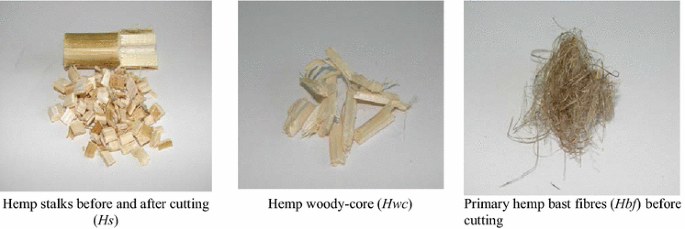
Danielewicz and Surma-Ślusarska compared pulps made from different hemp components with birch and pine pulps.

Hemp stalk pulp showed tensile properties similar to birch and greater tear resistance than pine under the reported conditions. Hemp bast pulp also exhibited high tear resistance but relatively low breaking length.

Read original research ↗
Three photographs of hemp stalks, woody core and bast fibers used in the research
Figure 1: hemp raw materials. Danielewicz & Surma-Ślusarska (2017), Cellulose. CC BY 4.0. Unmodified figure.
Research review 05 / Nanomaterials / 2025

Gum from acacia

This review examines gum arabic, a naturally occurring material collected from the hardened exudate of certain acacia trees, and describes its composition and diverse industrial applications.

Its water solubility and film-forming characteristics explain its usefulness in formulations. These characteristics do not establish safety when burned or inhaled.

Read original review ↗
Material origin
Original explanatory illustration based on the material description in Nanomaterials 15(4), 290 (2025).
Research transparency

Know what the research shows

These independent publications were not commissioned by Panda and do not test Panda products. Raw-material research does not establish comparative health benefits, combustion safety or a lower environmental footprint for finished rolling papers. No rolling paper makes smoking safe.

For questions about materials or sourcing, contact us.